Pages

Thursday, 6 March 2014

Superconductors

Superconductors - Materials, Properties and Applications

 Edited by Alexander Gabovich, ISBN 978-953-51-0794-1, 440 pages. 

Click Here to read and download.

The book includes 17 chapters written by noted scientists and young researchers and dealing with various aspects of superconductivity, both theoretical and experimental. The authors tried to demonstrate their original vision and give an insight into the examined problems. A balance between theory and experiment was preserved at least from the formal viewpoint (9 and 8, respectively). The readers should be warned that many of the problems studied here are far from being solved and are treated on the basis of competing viewpoints. The reason is that such is the state of the art! Science of superconductivity develops rapidly and new unexpected discoveries are expected in the nearest future.


Chapters :

Wednesday, 5 March 2014

A Brief History of time by Stephen Hawking

A Brief History Of Time - Stephen Hawking

Pages - 256

Download Link (pdf) -  Click Here

A Brief History of Time (subtitled "From the Big Bang to Black Holes") is a popular science book written by British physicist Stephen Hawking and first published by the Bantam Dell Publishing Group in 1988. It became a best seller and has sold more than 10 million copies. It was also on the London Sunday Times best-seller list for more than five years. 

A Brief History of Time attempts to explain a range of subjects in cosmology, including the Big Bang, black holes and light cones, to the nonspecialist reader. Its main goal is to give an overview of the subject but, unusual for a popular science book, it also attempts to explain some complex mathematics. The 1996 edition of the book and subsequent editions discuss the possibility of time travel and wormholes and explore the possibility of having a universe without a quantum singularity at the beginning of time.
The author notes that an editor warned him that for every equation in the book the readership would be halved, hence it includes only a single equation: E = mc2. Early in 1983, Hawking approached Simon Mitton, the editor in charge of astronomy books at Cambridge University Press, with his ideas for a popular book on cosmology. Mitton was doubtful about all the equations in the draft manuscript, which he felt would put off the buyers in airport bookshops that Hawking wished to reach. It was with some difficulty that he persuaded Hawking to drop all but one equation. In addition to Hawking's notable abstention from presenting equations, the book also simplifies matters by means of illustrations throughout the text, depicting complex models and diagrams.

:Chapters:

Chapter 1 - Our Picture of the Universe
Chapter 2 - Space and Time
Chapter 3 - The Expanding Universe
Chapter 4 - The Uncertainty Principle
Chapter 5 - Elementary Particles and the Forces of Nature
Chapter 6 - Black Holes
Chapter 7 - Black Holes Ain't So Black
Chapter 8 - The Origin and Fate of the Universe
Chapter 9 - The Arrow of Time
Chapter 10 - Wormholes and Time Travel
Chapter 11 - The Unification of Physics
Chapter 12 - Conclusion
Glossary
Acknowledgments & About The Author


Saturday, 1 March 2014

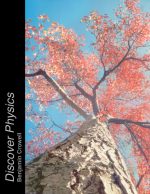
Discover Physics


Author: Benjamin Crowell

Pages :193 Chapters : 7

Format : PDF

Download Link - Click Here

cover of book
:Description:
Discover Physics is a conceptual physics textbook intended for students in a non-mathematical one-semester general-education courses.
:Chapters:

1. The Rules of the Rules
2. The Ray Model of Light
3. Images
4. Conservation of Mass and Energy
5. Conservation of Momentum
6. Relativity
7. Electricity and Magnetism